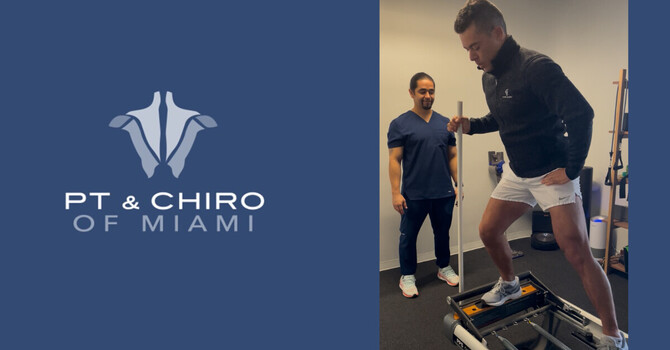
Neck pain can make everyday activities such as working at a computer, driving, sleeping, exercising, or simply turning your head uncomfortable. For many patients, physical therapy for neck pain in Miami Beach offers a conservative, non-surgical approach focused on restoring movement, improving strength, and reducing mechanical factors that may contribute to symptoms.
At PT & Chiro of Miami, we individualize neck rehabilitation. Your physical therapist evaluates how your neck moves, whether your upper back and shoulders contribute to the problem, how your posture and daily habits affect symptoms, and whether nerve-related signs are present.
The goal isn't simply to make your neck feel better temporarily. It is to improve your ability to move, work, sleep, exercise, and function with less pain and greater confidence.

Why Does My Neck Hurt?
Neck pain can come from several different structures, including muscles, joints, discs, ligaments, and nerves. Symptoms may develop gradually or begin after a specific injury.
Common causes include:
- Muscle strains
- Poor or sustained posture
- Whiplash injuries
- Cervical disc irritation
- Degenerative changes
- Facet joint irritation
- Nerve-root compression
- Workstation ergonomics
- Sports injuries
- Car accidents
- Repetitive upper-body activity
Neck Pain From Desk Work and Poor Posture
Long periods of sitting, working on laptops, looking down at phones, and using poorly positioned monitors can all contribute to neck discomfort.
No single posture eliminates neck pain, but staying in one position too long can increase stiffness and fatigue.
Physical therapy may help by addressing:
- Neck and upper-back mobility
- Deep neck flexor strength
- Shoulder blade control
- Workstation setup
- Movement breaks
- Postural endurance
Whiplash and Neck Pain After a Car Accident
Whiplash occurs when a collision rapidly forces the head and neck backward and forward. This can irritate muscles, ligaments, joints, and other cervical spine structures.
Symptoms may include:
- Neck pain
- Stiffness
- Headaches
- Shoulder pain
- Upper-back pain
- Dizziness
- Reduced range of motion
Symptoms do not always appear immediately after an accident. Some patients notice increasing discomfort over the next 24 to 72 hours.
A physical therapy evaluation can help identify movement restrictions, strength deficits, and other functional limitations after a collision.
Cervical Disc Problems and Nerve-Related Neck Pain
Discs in the cervical spine sit between the vertebrae and help absorb forces. When a disc becomes irritated or herniated, symptoms may remain in the neck or travel into the shoulder, arm, or hand.
Possible symptoms include:
- Neck pain
- Shoulder or shoulder-blade pain
- Numbness
- Tingling
- Burning sensations
- Weakness in the arm or hand
Because these symptoms may indicate nerve irritation, a thorough clinical evaluation is important before starting treatment.
Sometimes Shoulder Pain Is Actually Coming From the Neck
Neck and shoulder symptoms can overlap. A patient may feel pain around the shoulder blade or upper arm even when the primary problem is in the cervical spine.
A comprehensive evaluation may examine:
- Cervical range of motion
- Shoulder mobility
- Upper-back mobility
- Strength
- Neurological symptoms
- Reflexes when indicated
- Posture
- Movements that reproduce symptoms
This helps determine whether treatment should focus primarily on the neck, shoulder, or both.
How Physical Therapy for Neck Pain Works
Your treatment plan depends on the underlying condition, symptom severity, and how your neck responds to movement.
1. Reduce Pain and Irritation
Early treatment may focus on reducing aggravating activities while maintaining appropriate movement.
Physical therapy may include gentle exercise, hands-on treatment, mobility work, and other therapeutic techniques based on your clinical presentation.
2. Restore Neck Mobility
Neck pain often leads patients to move less. Over time, that can increase stiffness.
Your therapist may use carefully selected mobility exercises and manual therapy to improve a comfortable range of motion.
3. Strengthen the Deep Neck Muscles
The deep neck flexor muscles help support and control the cervical spine.
Weakness or poor endurance in these muscles may contribute to fatigue and discomfort during prolonged sitting or computer work.
Rehabilitation may include progressive exercises designed to improve cervical control without aggravating symptoms.
4. Improve Shoulder Blade Control
The neck and shoulder girdle work together. Weakness or poor control of the muscles around the shoulder blades can influence upper-body posture and neck mechanics.
Exercises may target:
- Middle and lower trapezius
- Serratus anterior
- Rhomboids
- Rotator cuff muscles
5. Improve Upper-Back Mobility
Limited thoracic spine mobility can increase the amount of motion required from the neck during daily activities.
Depending on the evaluation, your therapist may include upper-back mobility work as part of a broader cervical rehabilitation program.
6. Return to Normal Activity
Later-stage rehabilitation should prepare you for the demands of your actual life.
This may include returning to:
- Desk work
- Driving
- Weight training
- Swimming
- Tennis
- Pickleball
- Golf
- Running
- Manual work
What Exercises May Be Used for Neck Pain?
No single exercise program works for every patient.
Depending on your diagnosis and stage of recovery, physical therapy may include:
- Gentle cervical range-of-motion exercises
- Chin-tuck variations
- Deep neck flexor strengthening
- Thoracic mobility exercises
- Rows
- Scapular stabilization
- Rotator cuff strengthening
- Postural endurance exercises
- Progressive resistance training
Adjust exercises if they significantly increase radiating pain, numbness, tingling, weakness, dizziness, or other concerning symptoms.
Manual Therapy for Neck Pain
Manual therapy may be incorporated when appropriate to address restricted joint movement or soft tissue tension.
Hands-on treatment may help temporarily reduce symptoms or improve mobility so that exercise becomes easier.
The goal is generally to support active rehabilitation rather than make the patient dependent on passive care.
Can Chiropractic Care Be Combined With Physical Therapy for Neck Pain?
Yes. Some patients benefit from combining chiropractic care with physical therapy when both spinal mechanics and strength or movement limitations need attention.
Chiropractic care may focus on joint mobility and spinal mechanics, while physical therapy focuses on strength, endurance, posture, and movement retraining.
At PT & Chiro of Miami, having both services under one roof allows us to coordinate care around the patient's specific presentation.
Can Physical Therapy Help Cervicogenic Headaches?
Some headaches originate from structures in the neck. These are often called cervicogenic headaches.
Symptoms may include:
- Headache associated with neck pain
- Reduced neck mobility
- Pain triggered by certain neck positions
- Pain around the back or side of the head
When appropriate, physical therapy may address cervical mobility, muscle endurance, posture, and upper-back function.
Do You Need an MRI for Neck Pain?
Not every episode of neck pain requires imaging.
Many neck problems can initially be assessed through medical history, symptoms, neurological screening, and physical examination.
Imaging may be appropriate when:
- There was significant trauma
- Progressive weakness is present
- There are persistent neurological symptoms
- Serious pathology is suspected
- Symptoms fail to improve as expected
- Imaging would change treatment decisions
When Should You See a Physical Therapist for Neck Pain?
Consider scheduling an evaluation if neck pain:
- Persists or repeatedly returns
- Limits your ability to turn your head
- Interferes with sleep
- Makes driving difficult
- Causes headaches
- Travels into the shoulder or arm
- Is accompanied by numbness or tingling
- Started after a car accident or sports injury
- Interferes with work or exercise
Neck Pain Symptoms That Need Prompt Medical Attention
Seek urgent medical evaluation for symptoms such as:
- Severe trauma
- Progressive arm or hand weakness
- Difficulty walking or maintaining balance
- New bowel or bladder dysfunction
- Severe headache with neurological changes
- Fever with severe neck pain
- Loss of consciousness after trauma
How Long Does Physical Therapy for Neck Pain Take?
The recovery timeline depends on the diagnosis and severity.
A mild muscular strain may improve relatively quickly, while whiplash, chronic neck pain, nerve-related symptoms, or post-operative rehabilitation may require a longer treatment plan.
Factors affecting recovery include:
- Diagnosis
- Duration of symptoms
- Severity
- Neurological involvement
- Mobility limitations
- Strength deficits
- Work demands
- Activity level
- Consistency with rehabilitation
Measure progress by changes in pain, range of motion, strength, and function rather than a predetermined number of visits.
Neck Physical Therapy for Desk Workers in Miami Beach
Miami professionals who spend long hours at computers frequently experience neck stiffness and upper-back tension.
A physical therapist can help evaluate the relationship between your workstation, sitting habits, movement frequency, and symptoms.
Recommendations may include:
- Monitor height adjustments
- Chair positioning
- Keyboard and mouse placement
- Movement breaks
- Postural endurance exercises
- Upper-back mobility work
The goal is not to maintain a rigid "perfect posture" all day. It is to improve your body's ability to tolerate the positions your work requires while changing positions regularly.
Physical Therapy for Athletes With Neck Pain
Neck symptoms can affect athletes involved in swimming, cycling, golf, weightlifting, tennis, combat sports, and other activities.
A sports-focused physical therapy evaluation may examine:
- Cervical mobility
- Upper-back mobility
- Shoulder strength
- Posture under load
- Training volume
- Sport-specific positioning
Treatment can then progress to meet the demands of the patient's sport.
Why Choose PT & Chiro of Miami for Neck Pain?
Neck pain can be sensitive to small changes in movement and positioning. That makes individualized attention especially important.
PT & Chiro of Miami emphasizes one-on-one physical therapy so your therapist can observe how you move, adjust exercises during the session, and modify treatment according to your response.
Direct care allows your therapist to:
- Assess your neck and upper body in detail
- Monitor neurological symptoms when relevant
- Modify exercises based on pain
- Progress strengthening appropriately
- Perform hands-on treatment when indicated
- Address work, sport, and lifestyle demands
- Coordinate with chiropractic care when appropriate
Start Physical Therapy for Neck Pain in Miami Beach
If neck pain is affecting how comfortably you work, sleep, drive, exercise, or move through your day, it may be time for a professional evaluation.
PT & Chiro of Miami provides one-on-one physical therapy in Miami Beach for neck pain, whiplash, sports injuries, postural problems, and other musculoskeletal conditions.
Your treatment begins with identifying what contributes to your symptoms and building a rehabilitation plan around your movement, strength, and recovery goals.
Call or text (305) 673-8248 or contact PT & Chiro of Miami to schedule a neck pain evaluation.
Frequently Asked Questions About Physical Therapy for Neck Pain in Miami Beach
Can physical therapy help neck pain without surgery?
Many cases of neck pain can be managed conservatively at first, depending on the diagnosis and severity. Physical therapy may address mobility, strength, posture, endurance, and movement patterns. Certain traumatic injuries or progressive neurological symptoms may require additional medical evaluation.
Is physical therapy effective for whiplash?
Physical therapy may be used as part of recovery after whiplash to address neck mobility, strength, pain, and functional limitations. Treatment should be individualized according to the patient's symptoms and the severity of the injury.
Can neck problems cause shoulder or arm pain?
Yes. Irritation of cervical joints, discs, or nerves can sometimes produce pain around the shoulder blade, shoulder, arm, or hand. Numbness, tingling, or weakness may also occur. A clinical evaluation can help determine whether symptoms are coming from the neck, shoulder, or both.
What exercises are used in physical therapy for neck pain?
Exercises vary by condition but may include gentle neck mobility, deep neck flexor strengthening, upper-back mobility, shoulder blade strengthening, postural endurance exercises, and progressive resistance training.
Do I need an MRI before starting physical therapy for neck pain?
Not necessarily. Many neck conditions can initially be evaluated through history and physical examination. Imaging may be appropriate after significant trauma, with progressive neurological symptoms, when serious pathology is suspected, or when imaging would change treatment decisions.
Should I see a chiropractor or physical therapist for neck pain?
The appropriate treatment depends on what is contributing to the symptoms. Physical therapy focuses on mobility, strength, endurance, and movement retraining, while chiropractic care may address spinal and joint mechanics. Some patients may benefit from coordinated care involving both disciplines.
Where can I get physical therapy for neck pain in Miami Beach?
PT & Chiro of Miami provides individualized physical therapy for neck pain and other musculoskeletal conditions in Miami Beach. Call or text (305) 673-8248 or use the clinic's online contact page to request an evaluation.
Joseph Hudson
Contact Me