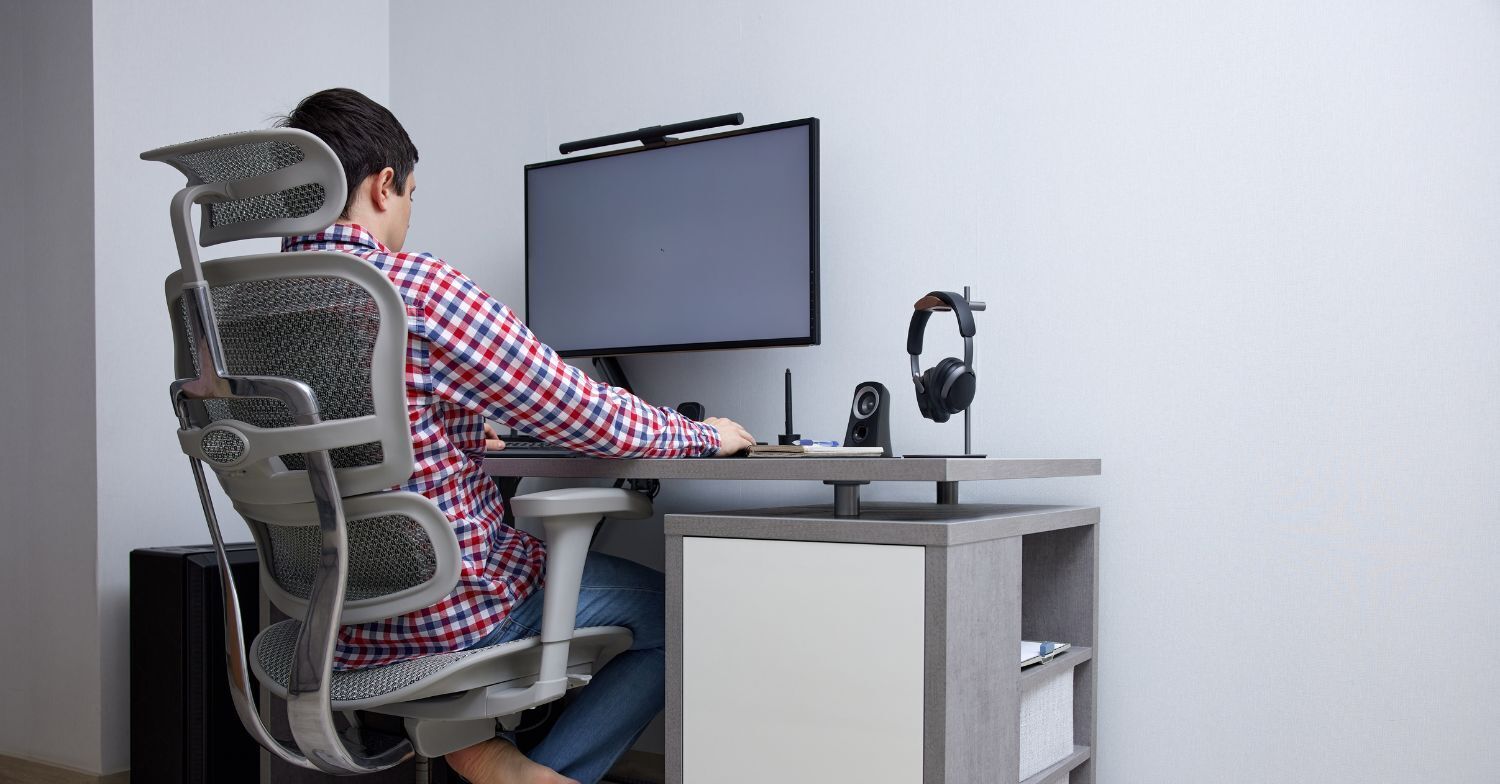
Working from home sounds comfortable until your neck stiffens, your lower back tightens, and your shoulders start burning by 3 PM. If you are searching for ergonomics, solutions for work-from-home pain, or physical therapy for desk workers, this guide gives you practical fixes you can apply today.
The goal is not a perfect Instagram office setup. It is reducing strain, improving posture endurance, and preventing the daily micro-stress that builds into chronic pain.
Why Desk Work Causes Pain
The human body is built to move. Sitting itself is not the problem. Staying in one position for hours is. Over time, static posture can lead to:
- Forward head posture and neck strain
- Rounded shoulders and upper back tightness
- Low back compression
- Hip flexor stiffness
- Wrist and forearm irritation
In Miami, long commutes, hybrid work schedules, and laptop-heavy setups make these patterns even more common.
Quick Workstation Fixes You Can Make Today
1) Screen Height Matters More Than You Think
Your screen should be at eye level so you are not constantly looking down. If you are using a laptop, consider:
- A laptop stand or stack of books
- An external keyboard and mouse
2) Support Your Lower Back
If your chair lacks lumbar support, place a small pillow or rolled towel behind your lower back. The goal is gentle support, not over-arching.
3) Keep Feet Flat on the Floor
Your hips and knees should be roughly at 90 degrees. If your feet dangle, use a small footrest.
4) Elbows Close to 90 Degrees
Your keyboard should allow your elbows to rest comfortably near your sides. Avoid reaching forward, which strains shoulders and upper traps.
5) The 45-Minute Rule
Every 45 to 60 minutes, stand up and move for 60 to 90 seconds. Short breaks reduce cumulative strain more than one long stretch at the end of the day.
5-Minute Desk Reset Routine
These simple movements help counteract prolonged sitting.
Chin Tucks (Deep Neck Activation)
- Sit tall.
- Gently pull your chin straight back without tilting up or down.
- Hold 5 seconds, repeat 5 to 8 times.
Seated Thoracic Extension
- Place your hands behind your head.
- Gently arch over the back of your chair.
- Take 5 slow breaths.
Standing Hip Flexor Stretch
- Step one foot back into a gentle lunge.
- Tuck your pelvis slightly.
- Hold 20 seconds each side.
Scapular Retractions
- Squeeze shoulder blades together without shrugging.
- Hold 5 seconds, repeat 8 to 10 times.
Wrist Mobility Break
- Gently stretch wrists in flexion and extension.
- Perform 5 to 8 slow repetitions each direction.
Common Desk-Related Pain Patterns
Neck and Headaches
Often caused by forward head posture and weak deep neck stabilizers.
Upper Back Burning
Typically linked to rounded shoulders and endurance deficits in the mid-back.
Low Back Stiffness
Frequently related to prolonged sitting and weak glutes and core.
Shoulder Pain
Commonly, keyboard placement causes forward reaching or shrugging.
Wrist and Forearm Pain
Often associated with repetitive typing and poor wrist alignment.
When Work-from-Home Pain Becomes Chronic
If your pain:
- Persists for more than two weeks
- Worsens despite ergonomic changes
- Radiates into the arm or leg
- Interferes with sleep or productivity
It may be time for a structured treatment plan.
How Physical Therapy Helps Desk Workers
Physical therapy for desk workers focuses on correcting the root movement and strength deficits contributing to chronic strain.
- Posture and workstation assessment
- Core and glute strengthening
- Deep neck flexor training
- Scapular stabilization exercises
- Mobility restoration for stiff segments
- Personalized movement break strategies
Learn more about Physical Therapy.
How Chiropractic Care Supports Ergonomic Recovery
Chiropractic care may help reduce joint stiffness and restore mobility in the spine, especially when prolonged sitting leads to mechanical restriction.
- Spinal mobilization or adjustment
- Soft tissue techniques for tension relief
- Movement and posture guidance
Learn more about Chiropractic Care.
Build a Sustainable Desk Routine
- Alternate sitting and standing if possible
- Schedule movement breaks into your calendar
- Strength train 2 times per week
- Stay consistent with short posture resets
Schedule an Ergonomic Evaluation in Miami
If work-from-home pain is affecting your productivity or quality of life, PT & Chiro Miami can help identify the root cause and build a plan for lasting relief.
Call (305) 673-8248 or schedule here: https://ptcmiami.com/contact.
FAQ: Work-from-Home Ergonomics in Miami
What is proper desk ergonomics?
Proper ergonomics keeps your screen at eye level, elbows near 90 degrees, feet flat on the floor, and lower back supported to reduce strain.
Can poor ergonomics cause neck pain?
Yes. Prolonged forward head posture can strain neck muscles and contribute to headaches.
How often should I take movement breaks?
Every 45 to 60 minutes is ideal to reduce cumulative stress on joints and muscles.
When should I see a PT for desk-related pain?
If pain persists beyond two weeks or radiates into the arms or legs, a professional evaluation can help prevent chronic issues.
How do I book an appointment?
Call (305) 673-8248 or book online at https://ptcmiami.com/contact.
Joseph Hudson
Contact Me