If you have been searching for a non-surgical solution to disc pain in South Florida, you have probably come across two terms: Cox flexion-distraction and spinal decompression. These are two recognized approaches used in modern chiropractic care, and understanding how they differ can help you ask better questions about treatment.
Knowing which method fits your condition, your body, and your recovery goals is an important first step toward choosing the right care. This guide breaks down both options clearly so you can make a more informed decision before walking through the door at a clinic in Miami.
What Is Cox Flexion-Distraction Spinal Decompression in Miami Chiropractic Care?
Not every technique that decompresses the spine works the same way. That distinction can matter when you are dealing with a herniated disc, sciatica, spinal stenosis, or other mechanical spinal conditions.
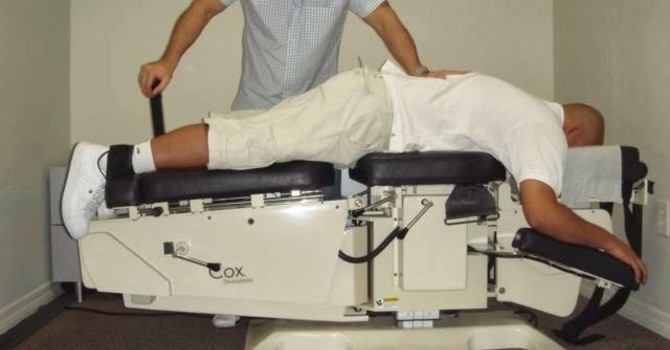
Cox flexion-distraction is a hands-on chiropractic method. A trained chiropractor uses a specialized segmented table and applies controlled, rhythmic movements to gently mobilize and distract targeted areas of the spine.
The chiropractor remains directly involved throughout the treatment and can adjust the technique based on the patient's response, symptoms, and clinical findings.
How the Cox Table Works
During treatment, the patient lies face down on a specialized Cox table. The movable section of the table is guided through controlled movements while the chiropractor stabilizes a targeted spinal segment.
This creates a gentle distraction force intended to improve spinal mobility and reduce mechanical pressure around affected discs, joints, and nerve structures.
Flexion-distraction techniques may incorporate movement in different planes based on the patient's condition and the provider's clinical assessment.
What Makes Cox Flexion-Distraction Different From Mechanical Spinal Decompression?
Mechanical spinal decompression generally uses a motorized or computerized traction table. The patient's body is positioned on the equipment, and the machine applies a programmed traction force according to predetermined treatment settings.
The main practical difference is how treatment is delivered.
- Cox flexion-distraction: Hands-on and clinician-guided throughout the session
- Mechanical spinal decompression: Equipment-driven using programmed traction settings
Both methods may be used to reduce mechanical pressure on spinal structures, but the treatment experience and the level of direct manual control differ.
Learn more about chiropractic care at PT & Chiro of Miami.
The Research Behind Cox Flexion-Distraction and Distraction-Based Spinal Care
Cox flexion-distraction has a documented history in chiropractic and manual therapy research. The method was developed by Dr. James M. Cox and has been studied in relation to spinal biomechanics, disc conditions, low back pain, and nerve-related symptoms.
Research involving flexion-distraction has examined biomechanical effects such as intradiscal pressure, foraminal dimensions, vertebral motion, and the response of spinal tissues to controlled distraction.
More broadly, traction and spinal manipulation have also been studied as conservative approaches for certain types of low back pain and lumbar disc conditions.
It is important to remember that treatment outcomes vary by diagnosis. A technique that is appropriate for one patient may not be the right approach for another.
Conditions Commonly Evaluated for Flexion-Distraction Care
Cox flexion-distraction may be considered for patients with conditions including:
- Lumbar disc herniation
- Bulging discs
- Sciatica
- Lumbar spinal stenosis
- Degenerative disc disease
- Facet joint dysfunction
- Spondylolisthesis
- Persistent low back pain
- Certain post-surgical spinal presentations
A clinical evaluation is necessary before treatment to determine whether a distraction-based approach is appropriate.
How Miami's Chiropractic Landscape Affects Your Treatment Options in 2026
Miami patients can find spinal decompression advertised under many different names. Some clinics use motorized traction systems. Others provide hands-on chiropractic methods such as flexion-distraction.
Patients should look beyond the marketing name of a treatment and ask how the therapy is actually delivered.
Florida Regulation of Chiropractic Care
The Florida Board of Chiropractic Medicine regulates licensed chiropractic physicians under Chapter 460 of the Florida Statutes and applicable administrative rules.
Chiropractic physicians may use professional methods and treatment procedures that fall within their legal scope of practice, training, and competence.
Cox Technic certification is separate from a Florida chiropractic license. It involves additional education and training in the specific flexion-distraction method.
What to Ask Before Choosing a Spinal Decompression Provider
Before committing to treatment, ask:
- Is the treatment hands-on or machine-driven?
- Who will perform or supervise the treatment?
- What Florida license does the provider hold?
- Does the provider have additional training in the specific technique?
- Will my treatment plan be based on my diagnosis and symptoms?
- Will imaging be reviewed when clinically relevant?
- How will progress be measured?
A reputable clinic should be able to explain exactly what type of spinal decompression it provides.
Cox Flexion-Distraction vs. Mechanical Spinal Decompression
| Factor | Cox Flexion-Distraction | Mechanical Spinal Decompression |
|---|---|---|
| Treatment Delivery | Hands-on and chiropractor-guided | Motorized or computerized traction equipment |
| Provider Involvement | Direct manual involvement throughout treatment | Provider sets and monitors machine parameters |
| Adjustability | Movements can be modified during treatment | Force and timing follow programmed settings |
| Movement | May incorporate controlled flexion-distraction movements | Primarily traction-based |
| Treatment Experience | Manual, low-force, clinician-guided care | Passive machine-based treatment |
| Coverage | Depends on the billed chiropractic service and insurance policy | Coverage varies significantly by insurer and service classification |
Treatment Delivery
Cox flexion-distraction is a hands-on technique. The chiropractor directly guides the treatment through controlled movements of the specialized table.
Mechanical decompression relies on traction equipment that applies force according to programmed settings.
Adaptability During Treatment
With a hands-on flexion-distraction approach, the chiropractor can modify positioning, direction, or treatment intensity based on the patient's response.
Mechanical decompression settings are selected before or during treatment according to the equipment and protocol being used.
Conditions and Patient Preferences
Cox flexion-distraction may be considered for patients with complex spinal presentations involving discs, joints, or nerve irritation.
Mechanical decompression may appeal to patients who prefer a passive traction-based treatment experience.
Neither treatment should be selected based on marketing alone. The patient's diagnosis, medical history, symptoms, examination findings, and goals should guide the recommendation.
Why Cox Technic Care Is Part of the PT & Chiro of Miami Approach
At PT & Chiro of Miami, chiropractic care emphasizes individualized, low-force treatment. Cox flexion-distraction is one of the specialized approaches used to address certain spinal conditions.
The clinic's care model is built around direct provider attention and personalized treatment planning. Patients are evaluated based on their specific symptoms, diagnosis, movement limitations, and recovery goals.
Rather than applying the same spinal decompression protocol to every patient, the treatment approach is selected based on the clinical presentation.
Patients looking for gentle care can learn more about our low-force chiropractic services in Miami Beach.
Combining Chiropractic Care With Physical Therapy
Spinal decompression or flexion-distraction may address one part of a patient's condition. Weakness, poor movement control, limited hip mobility, reduced core stability, or postural changes may also contribute to recurring symptoms.
This is where physical therapy may become an important part of the treatment plan.
Physical therapy may focus on:
- Core strengthening
- Hip mobility
- Spinal stabilization
- Movement retraining
- Postural control
- Progressive return to activity
When appropriate, coordinating chiropractic care and physical therapy allows the treatment team to address both spinal mechanics and functional movement.
Who May Be a Candidate for Cox Flexion-Distraction?
You may want to discuss Cox flexion-distraction with a qualified chiropractor if:
- You have a diagnosed herniated or bulging disc
- You experience sciatica or radiating leg symptoms
- You have spinal stenosis or degenerative disc changes
- You prefer a gentle, low-force chiropractic approach
- Traditional high-velocity adjustments make you uncomfortable
- You have persistent low back pain that has not improved with previous care
- You have a history of spinal surgery and need an individualized approach
A detailed evaluation should always come before treatment. Post-surgical patients and individuals with osteoporosis, fractures, significant neurological symptoms, or complex medical histories may require additional screening or medical coordination.
Who May Prefer Mechanical Spinal Decompression?
Mechanical spinal decompression may appeal to patients who prefer passive traction-based care or who have previously responded well to mechanical traction.
The suitability of mechanical decompression depends on the patient's condition and medical history. Certain spinal conditions may require different treatment approaches or additional clinical evaluation.
Some patients may receive different conservative treatments at different stages of recovery. The most appropriate plan should be individualized.
Take the First Step Toward Spinal Pain Relief in Miami
You deserve care that is built around your condition, not around a preset machine program or generic treatment package.
At PT & Chiro of Miami, patients receive individualized evaluations and personalized treatment recommendations based on their symptoms, movement, and recovery goals.
If you are comparing Cox flexion-distraction and spinal decompression in Miami, start with a conversation about your specific condition.
Call or text (305) 673-8248 or schedule a consultation with PT & Chiro of Miami.
Frequently Asked Questions
What is the difference between Cox flexion-distraction and spinal decompression?
Cox flexion-distraction is a hands-on chiropractic technique using a specialized segmented table and clinician-guided movements. Mechanical spinal decompression generally uses motorized traction equipment and programmed treatment settings. Both may be used to reduce mechanical pressure on spinal structures, but the delivery of treatment differs.
Is Cox flexion-distraction safe for herniated discs?
Cox flexion-distraction may be considered for certain patients with herniated or bulging discs because it uses a controlled, low-force approach. A clinical evaluation is necessary to determine whether the technique is appropriate for the patient's specific disc condition and neurological findings.
Why do some chiropractors pursue Cox Technic certification?
Cox Technic certification involves additional education and training beyond the standard chiropractic licensing process. Providers may pursue certification to develop specialized skills in flexion-distraction and low-force spinal care.
Will insurance cover Cox flexion-distraction or spinal decompression?
Insurance coverage depends on the service performed, diagnosis, medical necessity, provider, billing code, and individual insurance policy. Coverage for mechanical spinal decompression varies by insurer. Patients should verify benefits before beginning treatment.
How long does a Cox flexion-distraction session take?
Treatment time varies depending on the patient's condition and overall treatment plan. The initial visit may take longer because it typically includes an evaluation, a review of medical history, and a discussion of treatment options.
Can Cox flexion-distraction be combined with physical therapy?
Yes. Flexion-distraction may be coordinated with physical therapy when clinically appropriate. Chiropractic treatment may address spinal mobility and mechanical factors, while physical therapy can focus on strength, stability, mobility, and movement patterns.
What conditions may be evaluated for Cox flexion-distraction care?
Cox flexion-distraction may be considered for conditions including herniated or bulging discs, sciatica, degenerative disc disease, spinal stenosis, facet joint dysfunction, persistent low back pain, and certain post-surgical spinal presentations. A clinical evaluation is required to determine suitability.
Joseph Hudson
Contact Me